Form
The philosophy behind a working mask — why blank, distorted, and abstracted faces read as alive, and lifelike ones don't.

The Mask on Mars
Our ability to recognize faces is hardwired into our brains. Through millions of years of evolution, the primates that could better see the pattern of a face through the grass or disguised by camouflaging mud became our tiny, ancient grandmothers. Any increase in that sensitivity was a net benefit to those individuals who had it, so over time it grew more and more sensitive.
We humans see faces everywhere: mountain ranges, fruit, electrical outlets, even on the surface of other planets. This phenomenon is called pareidolia, and it's the secret ingredient in mask making.
Leaving Room for Pareidolia
Don't try to sculpt a perfect human face. First, it takes a lot of practice to do that and second it doesn't necessarily lead to a playful mask. You've probably heard of the "uncanny valley." That theory definitely applies to sculpting masks. When in doubt make a more simple choice and trust that your audience will fill in the details. But go too far into abstracting and the object-nature shines through and you've made a sculpture for the face.
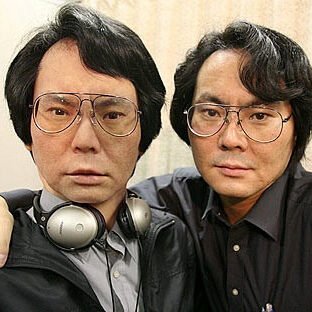
Too close
Perfection falls short. When the proportions are close to lifelike we see how far the material is different and it's unsettling.
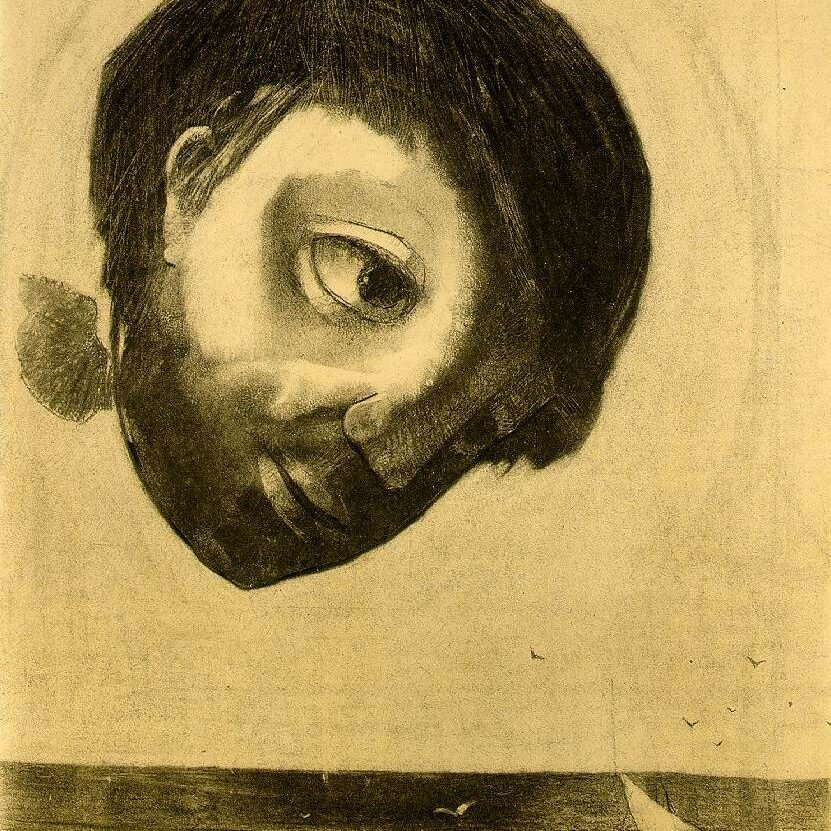
Pretty Good
Dynamic Balance. A balance of abstraction and familiar proportion works best. A sense of volume created by intersecting planes.
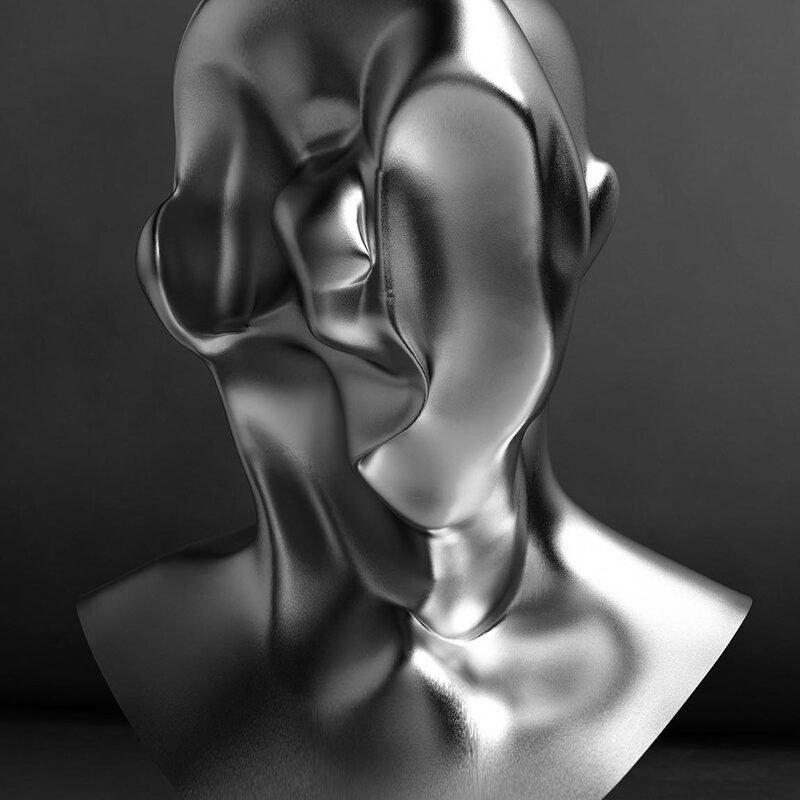
Too Far
Abstraction obfuscates. Push abstraction too far and the mask is an object, a disguise, a representation of some other being.
Dynamic Volumes
The mask is not a character, it's a volume, a form.
The character of the mask comes from the form of the mask itself. The general forms of the mask make the character, not the expression it's holding. You're looking for a form that is distinct and of itself. This form will call to be moved through space in a particular way. This movement calls the character into being. Not the other way around.
An illustration from Alexander Loomis' cartooning book "Fun With a Pencil" demonstrates something of this idea, but in two dimensions. Loomis demonstrates "Types" by playing with the proportions of a human face in various ways. The more extreme the distortion the more distinctive the type becomes.
Distorting the proportions of the human face is not the only way to arrive at a dynamic volume.

This famous set of drawings from the French painter Charles LeBrun demonstrates another approach to arriving at dynamic forms. Each of these faces is inspired by a different animal, giving rise to a fantastic menagerie of human types.

Unity in Form
We tend to think of the human face as we learned to draw it in elementary school. Two circles for eyes, a triangle nose, a line for a mouth and a big oval around all that. Watch that your sculpture doesn't become either a Mr. Potato Head with features "plugged in" or a Jack-o'-lantern with features carved out. Potato and pumpkin heads lack unity.
Unity in a mask is a general connectedness or interdependence of features. The brow is a consequence of the forehead, the eyes are right there because the cheek ends here, because the bridge of the nose has to be here, because the nostrils bring the lip all the way to here. Forming your own teleology of connectedness is a consequence of intuition and focused practice.
Connect Everything
Somehow we ignore the fact that most of the surface area of a face is cheek and forehead. These big open spaces are a good place to concentrate your attention. Focus on the overall structure of the mask and how the major planes of the face come together before working on details. Working from the edges of the mask will support the connection between all the features.
On Tension in Forms
Franz Xaver Messerschmidt was a German-Austrian artist who made delightfully ugly sculptures of facial expressions. His Character Heads are a wonderful exploration of contraction and tension in the human face — an excellent early study of facial expression and a good overview of facial folds and wrinkles.

"Form is important, we should learn form, but we should also remember to fill form with life."
Moving Right Along
OK, so now you have a good background on what goes into the form of theatrical masks — the philosophical, head-in-the-clouds, beard-stroking, inspirational backbone of it all. Now let's roll up our sleeves and move on to the down and dirty: sculpting in clay.